Skip to content


Tanzania has a growing market for beauty and personal care products, as well as a small but useful manufacturing base that meets both local and regional demand.
If you’re thinking about buying cosmetics from Africa, whether it’s for cost, import duty benefits, or positioning in the East African market, it’s important to know how Tanzania’s cosmetics manufacturing industry works.
This guide talks about eight well-known manufacturers in Tanzania and gives an honest look at the country’s production capabilities, the real problems that buyers often run into, and when it might be better to get parts from a well-known international OEM partner.

What Tanzania’s cosmetics manufacturing capabilities are like
Category Strengths: The Best Places to Make Things Locally
Compared to well-known centers in Asia or Europe, Tanzania’s cosmetics manufacturing industry is still in its early stages.
Bar soaps, detergents, basic personal care liquids, and hygiene products are the most popular categories in the industry. These products are easier to make and process. Local manufacturers have been able to better serve these segments because of decades of investment in domestic production.
Limitations in Formulation and Packaging
Formulations for skin care, especially those that use active ingredients like serums, SPF products, or specialized treatments, are not as advanced. Most local manufacturers aren’t ready for advanced cosmetic chemistry on a large scale.
There are also limits on packaging. A lot of Tanzanian manufacturers use packaging materials from other countries, which can make it hard for buyers looking for full-service OEM solutions to know how long it will take and how much it will cost.
Rules and Regulations and Geographic Concentration
Tanzania Bureau of Standards (TBS) is the main government agency in charge of making sure that cosmetics sold in Tanzania are safe, properly labeled, and of good quality. Anyone who wants to buy or sell in the Tanzanian market needs to know TBS requirements.
Most of the factories are in Dar es Salaam, but there are some in Tanga and other coastal industrial areas. The industry still has trouble getting access to skilled cosmetic chemists and formulators.

The Truth About How Cosmetics Are Made in Tanzania
Buyers can make better sourcing decisions when they know how things are made in their area.
Gaps in Export Capability and the Market’s Dependence on Imports
Most of the cosmetics made in Tanzania are for the East African market and the people who live there. Not all businesses have the same export-focused skills, such as the ability to handle international paperwork, get GMP certification that meets EU or US standards, and support for labeling in multiple languages.
A lot of the cosmetics that are sold in Tanzania are made in other countries, like Asia, Europe, or other African countries like South Africa and Kenya. This shows that people like well-known international brands better than local ones, and that local production is still limited.
The Pharma-Cosmetics Overlap Model
Some companies make hygiene products, topical antiseptics, and basic skin care products all in the same factory. These companies work at the intersection of cosmetics and pharmaceuticals. In markets where dedicated cosmetics factories haven’t fully split off from pharmaceutical contract manufacturing, this is a common model.
Realistic Examples of Local Sourcing
For buyers thinking about making things in Tanzania, the most realistic uses are products aimed at East African customers, formulations that fit with the simpler product categories that local factories handle well, and supply chains where being close to regional distribution is more important than how complicated the formulation is.

The Good and Bad Things About Making Cosmetics in Tanzania
Possible Benefits
One of the most obvious benefits is that it is close to regional markets. Local production can lower import duties and speed up the supply chain for brands that sell in Tanzania, Kenya, Uganda, and other EAC markets.
Cost of labor is lower than in many other manufacturing areas, which can be a plus for production methods that need a lot of workers.
Regulatory familiarity—manufacturers who are already working under TBS frameworks know what the local rules are, which can make it easier to register products for entry into the Tanzanian market.
Brands that want to build regional supply chain legitimacy or qualify for preferential trade arrangements within the East African Community are increasingly thinking about how to support local businesses.
Realistic Limits
There are big gaps in the ability to make formulations. It’s hard to find high-quality advanced skin care, color cosmetics, and specialty personal care formulations in your area.
Packaging dependency on imports makes it hard to plan production because costs and lead times are hard to predict.
There is a lot of difference between manufacturers when it comes to their quality management systems. There is no guarantee that the factory will always follow GMP, so buyers should plan for a thorough factory check.
There isn’t much help for exporting to markets outside of East Africa. Many local factories don’t have set procedures for things like documentation, testing, and certification for EU, US, or Gulf markets.
MOQ and scale flexibility may be limited. Some manufacturers focus on supplying a lot of products to customers in the US and may not be set up to handle the smaller, more personalized runs that new brands often need.

Why Many Companies Choose Overseas OEM Over Local Production
When brands look for products to sell in Tanzania or other parts of Africa, they often find that overseas OEM manufacturing, especially from China or South Korea, offers a better overall deal.
The main reasons are practical, not personal.
Established Asian OEM manufacturers have a much wider range of formulations. A brand that wants to sell skin care, hair care, and body care all at once will probably not be able to find one Tanzanian supplier who can do all three at the same time.
Pricing competitiveness at scale often favors overseas OEM, even after shipping costs are taken into account, because larger, more specialized factories are more efficient.
When working with established international OEM partners, it’s normal to get export-ready documents like safety assessments, INCI labeling, stability data, and third-party testing reports. For brands that want to sell in more than one market, it’s hard to get this infrastructure from smaller local suppliers.
There are a lot more choices when it comes to packaging. Manufacturers in other countries usually have more options for materials, custom tools, and established packaging supply chains.
For brands that care about formulation quality, compliance infrastructure, or multi-market distribution, overseas OEM is often the more reliable choice, even if regional sourcing is still a goal.
Key Cosmetics Manufacrurer in Tanzania
Zenufa Laboratories Ltd.
Zenufa Laboratories is one of the oldest companies in Tanzania that makes medicines and personal care products.
The company makes a variety of things, such as topical creams, hygiene products, and basic personal care products. Its experience making drugs gives it a level of knowledge about quality systems and process control that most Tanzanian cosmetics makers don’t have.
Zenufa is one of the more reliable local options for buyers who are interested in personal care categories that are related to hygiene.

TBS (Tanzania Bureau of Standards)
The Tanzania Bureau of Standards (TBS) is in charge of making and enforcing product standards, including those for cosmetics and personal care items.
It is not a cosmetics company, but it is the main government body that anyone who buys or sells cosmetics in Tanzania must work with. Before entering the Tanzanian market, no matter where the products are made, it is important to understand TBS requirements and product registration processes.

Salama Pharmaceuticals Limited
Salama Pharmaceuticals makes both drugs and personal care products.
In addition to its pharmaceutical lines, the company also makes hygiene products and basic personal care items. This model, which combines making drugs and cosmetics, is common in Tanzania and shows how the market is growing right now.
People who are thinking about buying Salama should figure out which types of products it can make well and make sure that the cosmetics it makes meet the quality standards for their market.

Chemi & Cotex Industries Ltd
Chemi & Cotex is one of the most well-known companies in Tanzania that makes household and personal care products.
The company has a strong presence in East Africa, where it makes soaps, detergents, and personal care items for sale in the region and at home. Because of its size and how long it has been in business, it is one of the more well-known local manufacturers of consumer goods.
Chemi & Cotex is a manufacturer with a long history of making soap, detergent, and basic personal care products for regional distribution.

Tanga Pharmaceuticals and Plastics Ltd
Tanga Pharmaceuticals & Plastics is based in the Tanga region and makes both drugs and plastic packaging.
This dual capability—production plus in-house plastics—is a practical advantage in a market where packaging supply chains can be limited. The company’s history in the pharmaceutical industry suggests that it has some good infrastructure, but buyers should check its specific cosmetics manufacturing capabilities on their own.

CIT (Creative Inter Traders Ltd)
Creative Inter Traders is a Tanzanian company that makes and sells personal care and beauty products.
CIT works in the part of the local market that deals with consumers and offers products in categories like skin care and personal care basics. There isn’t much public information about its production scale or OEM capabilities, so any buyer who is thinking about it as a manufacturing partner should talk to the supplier directly.

Mamujee Products Ltd
Mamujee Products is a well-known Tanzanian company that makes personal care and household goods for consumers.
The company has sold a wide range of products in East Africa and has expanded its distribution network in Tanzania and nearby markets. Mamujee is a good company to talk to at first if you’re looking for a local supplier with experience in regional distribution.

Eco Consumer Products Limited
Eco Consumer Products makes personal care and household goods.
The company focuses on making products for the local market that are aimed at consumers. Like many other Tanzanian manufacturers, it doesn’t have a lot of public information about its OEM and private label capabilities. Before talking about sourcing, it’s best to do a direct assessment.

Xiran Cosmetics: An International OEM Option
Working with a well-known international OEM partner is a good option or addition for buyers who need more in-depth formulations, export-ready compliance documents, or a wider range of product categories than Tanzanian manufacturers can currently provide.
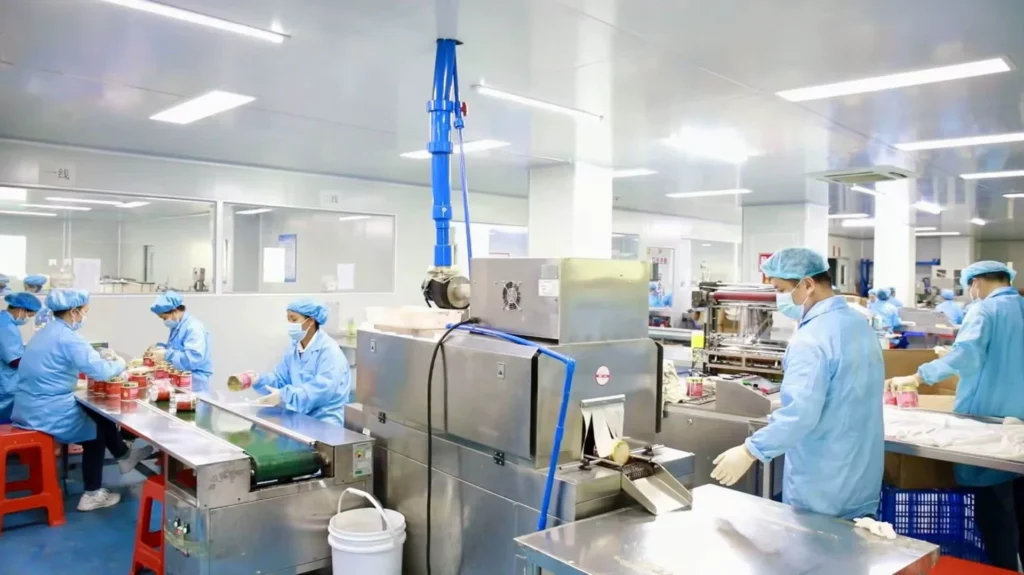
Xiran Cosmetics is a Chinese OEM and private label cosmetics manufacturer that has worked with brand buyers in many markets and categories.
Xiran is good at making skin care, hair care, body care, and color cosmetics. They have ISO 22716 GMP certification and a record of handling export paperwork for international sales. The company helps buyers with orders of all sizes, so both new and established brands can use it.
When buyers want to make a product line that will sell in East Africa and beyond, working with an OEM partner who knows the local market and can also make products for other countries can often lead to a better outcome than relying on local manufacturing alone.

Rules and Regulations for Cosmetics in Tanzania
The Tanzania Bureau of Standards (TBS) and, when necessary, the Tanzania Food and Drugs Authority (TFDA) set standards that all cosmetics sold in Tanzania must meet.
Both cosmetics made in the country and those brought in from other countries must meet requirements for product registration, labeling, and ingredient safety. Buyers who want to do business in Tanzania should get involved in these regulatory processes as soon as possible.
For buyers who also want to sell their products abroad, it’s important to know how cosmetic labeling and safety requirements are different in Tanzania and the markets they want to sell to, like the EU or the Gulf states.
Questions and Answers
Q1: Do any cosmetics companies in Tanzania offer OEM or private label services?
Some Tanzanian manufacturers offer OEM or private label services, but the level of service varies a lot. Chemi & Cotex, Mamujee Products, and Eco Consumer Products are some of the companies that sell to people in the area and nearby. Before making a purchase, buyers should check each manufacturer’s specific formulation capabilities, quality systems, and experience with making private labels.
Q2: Who is in charge of regulating cosmetics in Tanzania?
The Tanzania Bureau of Standards (TBS) is in charge of setting standards for cosmetics and giving products the green light. The Tanzania Food and Drugs Authority (TFDA) is also in charge of some types of cosmetics and hygiene products. Buyers must follow both rules when they apply.
Q3: What kinds of cosmetics are best made in Tanzania?
Bar soaps, basic personal care liquids, hygiene products, and household cleaning products are the most common things made in Tanzania. It’s harder to find local sources for advanced skin care products, color cosmetics, and specialty personal care items that are always of good quality.
Q4: Why do so many brands choose to make their products in other countries instead of Tanzania?
The main reasons are the ability to make different types of products, the ability to handle export paperwork, the ability to package products, and the ability to make products consistently. Established OEM manufacturers in other countries, especially China, usually have more product categories, GMP-certified facilities, and well-known ways to ship to many different markets around the world.
Q5: Can you make things in Tanzania and sell them to places like Europe or the Gulf?
It is possible in theory, but it is hard to do in practice. Most Tanzanian manufacturers want to sell their goods in Tanzania and other East African countries. For EU or Gulf exports, meeting the paperwork, safety checks, and compliance standards usually costs more money and may not be something that local suppliers do all the time.
Q6: What do I need to check before working with a cosmetics maker in Tanzania?
Check the following important areas: the status of GMP compliance, the ability to test products, the supply chain for packaging, experience with export paperwork, minimum order quantities, and quality control procedures. Because publicly available information about individual manufacturers can change, it is best to have third-party factory audits.
Q7: How does the cost of making things in Tanzania compare to making things in other countries?
Tanzania has low labor costs, but this benefit can be canceled out by the high cost of imported packaging, the limited supply chains for raw materials, and the fact that smaller production scales are less efficient. When you add in the costs of compliance and paperwork, the total cost of production in Tanzania isn’t much lower than working with a high-volume overseas OEM for many types of products.
Q8: Can a brand work with both a local Tanzanian manufacturer and an overseas OEM partner?
Yes, and this is a good way for brands to get a foothold in a region. For the East African market, local manufacturing may meet regulatory and distribution needs. An international OEM partner, on the other hand, can help with deeper formulations, consistent quality, and export-ready documentation for expanding into new markets.
End
Tanzania’s cosmetics manufacturing industry has good options for brands that want to sell their products in East Africa, especially in the areas of soap, hygiene, and basic personal care. Combining local sourcing with an established international OEM partner is still the best way to go for buyers who need more formulation options, export-ready paperwork, or help with compliance in multiple markets. The first step in choosing a supplier that meets your brand’s real needs is to know both the strengths and weaknesses of the local industry.