Skip to content


Peru is not among the first countries that come to mind when international brands think about cosmetics manufacturing. That is, in many ways, part of the opportunity.
For brands already operating in Latin America — or for buyers sourcing for regional distribution — Peru offers a small but active domestic manufacturing base, cost structures that sit below many Western alternatives, and suppliers with direct familiarity with Andean and broader South American market preferences. The challenge is that the supplier pool is narrow, public information on factories is limited, and most established manufacturers serve the local market first.
This guide is designed for B2B buyers evaluating cosmetics manufacturers in Peru, whether sourcing locally or comparing Peru against other regional and overseas options.

The Cosmetics Manufacturing Industry in Peru
Peru’s cosmetics and personal care sector has grown steadily over the past decade, driven largely by expanding middle-class consumption and increasing awareness of skincare categories.
Manufacturing, however, remains concentrated. A small number of established companies dominate domestic production, and most factories focus on serving local retail, pharmacy, and salon distribution rather than export-oriented OEM work. The country does not have the scale of Brazil or Mexico, nor the OEM ecosystem maturity of Korea or China.
That said, domestic manufacturing capability exists across skincare, body care, haircare, and personal care categories. Peru also has access to Andean botanical ingredients — including plant-derived extracts tied to regional biodiversity — which occasionally creates relevance for brands positioning around natural or clean-beauty concepts.
Compliance in Peru is governed by national health authorities and aligns broadly with the Andean Community cosmetic regulation framework, which creates a degree of regulatory consistency across Bolivia, Colombia, Ecuador, and Peru. Brands planning to distribute across the Andean Community should account for this shared regulatory environment when evaluating manufacturers.
Advantages and Limitations of Manufacturing in Peru
Understanding where Peru fits commercially is more useful than treating it as a generic sourcing option.
Practical advantages include:
- lower manufacturing cost relative to Europe and North America
- supplier familiarity with regional consumer preferences
- relevance for brands targeting Peru, Bolivia, Ecuador, and the broader Andean market
- access to certain botanical ingredients tied to South American biodiversity
Realistic limitations buyers should acknowledge:
- the supplier pool is significantly smaller than Brazil, Mexico, or Asian markets
- export-oriented OEM infrastructure is less developed than in more established manufacturing countries
- documentation and export support varies significantly by supplier
- international brands may find communication and onboarding slower than in factories with a clear export-first orientation
Peru is more useful as a regional market sourcing strategy than as a global OEM base. Brands entering South American markets — or distributing through regional channels — are better placed to extract value from local manufacturing than brands operating from a purely cost-driven or prestige-driven export logic.

Cosmetics Manufacturers in Peru: Supplier Profiles
The following companies represent the most visible cosmetics and personal care manufacturers currently operating in Peru. Given the limited size of the local market, buyers should conduct direct qualification with each supplier to confirm current service scope, product categories, and OEM availability.
Laboratorios La Cooper
Why brands consider this manufacturer
Laboratorios La Cooper is one of Peru’s longer-standing pharmaceutical and cosmetic manufacturing operations. The company produces across personal care and cosmetics categories and has established distribution through domestic pharmacy and retail channels.
Typical product scope
Skincare, body care, cleansers, and selected personal care products. The company’s pharmaceutical background may also be relevant for brands developing products with clinical positioning or sensitive-skin formulations.
Manufacturing characteristics
The factory appears oriented toward domestic-market production with established quality processes. Its pharmaceutical heritage suggests structured production systems and familiarity with documentation requirements.
Best fit for
Brands targeting the Peruvian domestic market, pharmacy-channel beauty concepts, or buyers who value manufacturing discipline over trend flexibility.
Less suitable for
Brands needing fast OEM customization, aggressive MOQ flexibility, or export-first production orientation.

Cordi SAC
Why brands consider this manufacturer
Cordi SAC operates as a cosmetics and personal care manufacturer within Peru’s domestic market. The company has visibility across skincare and personal care categories and is often associated with mass-market product segments.
Typical product scope
Body care, hair care, skincare, and general personal care. The company serves retail and consumer categories with a domestically-focused production model.
Manufacturing characteristics
Production appears oriented toward consistent batch production for domestic retail and distribution, with less clear visibility into custom formulation or export documentation capability.
Best fit for
Regional buyers, distributors, or brands that want mass-market personal care products positioned for local distribution.
Less suitable for
Premium positioning, dermocosmetic development, or highly customized private label formulation projects.
Laboratories Gilsan S.A.C.
Why brands consider this manufacturer
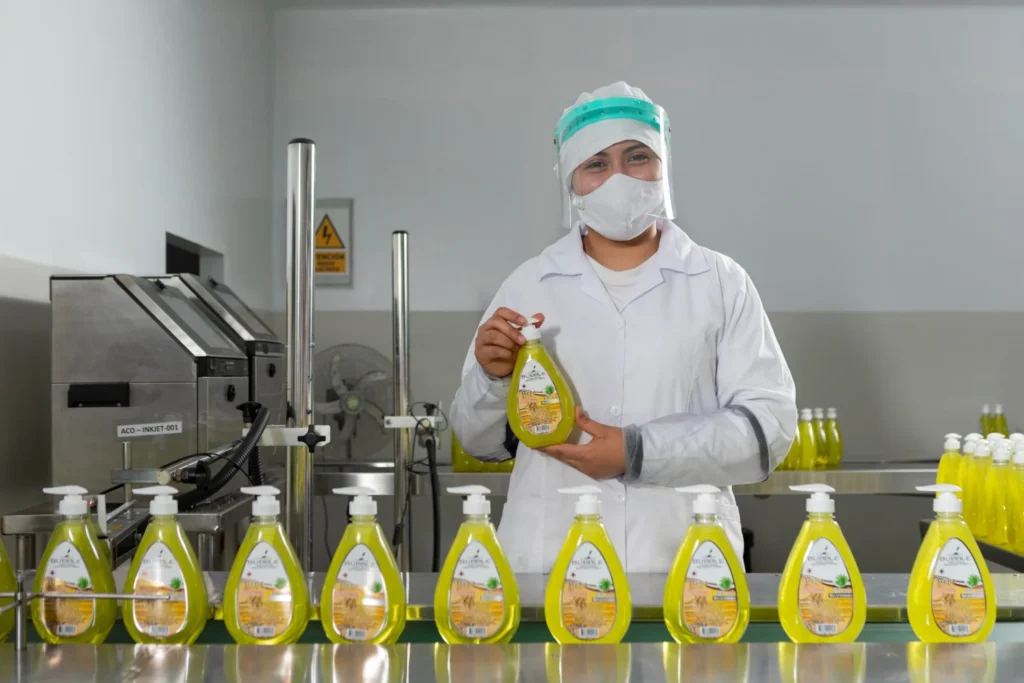
Gilsan operates as a cosmetics manufacturer with a focus on cosmetic and personal care product development. The company has domestic relevance across skincare and haircare categories, and its positioning suggests some openness to B2B-oriented production work.
Typical product scope
Skincare, hair care, and personal care products. Some production may extend into broader body care categories depending on formulation scope.
Manufacturing characteristics
Gilsan appears to operate with a product development orientation, suggesting potential for formulation customization at the domestic level. Buyers should confirm export readiness and documentation capability directly.
Best fit for
Brands exploring regional product development partnerships, particularly for skincare or hair care, with local distribution in mind.
Less suitable for
Large-scale export programs or brands that require established international OEM infrastructure.

Beautycorp Cosmetics
Why brands consider this manufacturer
Beautycorp operates with a more explicitly B2B and private label orientation than some Peruvian competitors, making it potentially more accessible for brands seeking cosmetics manufacturing services rather than finished consumer goods.
Typical product scope
Skincare and personal care formulations, with relevance for brands exploring private label development in the Peruvian market.
Manufacturing characteristics
The company’s B2B positioning suggests some degree of customization support and awareness of private label buyer needs. Documentation and export support should be confirmed on a project basis.
Best fit for
Brands interested in regional private label development, particularly startups or mid-market brands entering the South American market.
Less suitable for
High-volume, fast-turnaround global export programs.

Belcorp
Why brands consider this manufacturer
Belcorp is among the most recognized beauty and personal care companies in Latin America, with operations in Peru and significant regional brand equity. The company is best known as a direct-selling brand house rather than a pure OEM partner, but its manufacturing scale and formulation capability position it differently from smaller domestic players.
Typical product scope
Skincare, color cosmetics, fragrance, and personal care. Belcorp’s brand portfolio spans multiple product categories across premium and mass-market segments.
Manufacturing characteristics
Belcorp operates at larger industrial scale than most other Peruvian manufacturers, with established formulation processes. However, buyers should note that its primary orientation is toward developing and distributing its own brand portfolio, not servicing third-party OEM contracts.
Best fit for
Regional distribution and brand partnerships. Less commonly an OEM or private label partner for external brands.
Less suitable for
Standard third-party OEM sourcing. Buyers seeking pure manufacturing services may find this not a primary fit.

Manufacturer Comparison at a Glance
| Company | Positioning | Typical Strength | Best Fit |
|---|---|---|---|
| Laboratorios La Cooper | Pharmaceutical-heritage cosmetics manufacturer | Structured production, pharmacy-channel positioning | Domestic market, clinical-style brands |
| Cordi SAC | Mass-market personal care producer | Batch consistency, domestic retail coverage | Regional distributors, mass-market brands |
| Laboratories Gilsan S.A.C. | Cosmetics and personal care developer | Formulation development, skincare focus | Regional product development projects |
| Beautycorp Cosmetics | B2B-oriented private label manufacturer | Private label awareness, customization potential | Startups, regional private label brands |
| Belcorp | Large-scale regional beauty company | Industrial capacity, broad category coverage | Regional partnerships (primarily own brands) |
Alternative Option: Working With an Overseas OEM Manufacturer
For many brands evaluating Peru, the local supplier pool creates a practical limitation. Five manufacturers — several of which are primarily domestic-market-oriented — is a narrow selection for buyers with specific formulation, MOQ, customization, or export-documentation needs.
In these cases, working with an overseas OEM / ODM partner may be a more practical path, particularly for brands that do not require a Peruvian “made locally” story.
Guangzhou Xiran Cosmetics Co., Ltd. (Xiran Cosmetics) is one example of a China-based OEM / ODM and private label skincare manufacturer that supports overseas B2B customers. The company works across multiple product categories including facial skincare, body care, hair care, and personal care, and supports product development through custom formulation, packaging coordination, and export documentation.
For brands entering South American markets through direct importing — rather than requiring local Peruvian manufacturing — Xiran may offer broader category flexibility, a more structured export cooperation model, and better scalability than the current Peruvian supplier landscape supports.
Brands that specifically need local market production, regional regulatory positioning, or a Peruvian origin identity should still focus on local suppliers. However, for brands where manufacturing origin is less central to the strategy, an overseas partner like Xiran may be worth evaluating alongside domestic options.

How to Evaluate Cosmetics Manufacturers in Peru
Given the narrow supplier pool, careful qualification is especially important here.
Confirm OEM openness early. Not every manufacturer in Peru actively accepts third-party B2B projects. Some operate mainly to produce their own branded products. Confirm at the first contact whether the factory accepts external OEM or private label work.
Clarify export documentation capability. If the product needs to be distributed outside Peru, verify whether the supplier can support relevant documentation such as ISO 22716 cosmetic GMP alignment, safety data sheets, and certificates of analysis. Not every domestic-focused manufacturer has clear export processes.
Assess product category fit. Some manufacturers specialize more strongly in personal care or haircare; others lean toward skincare. Match your product type to the supplier’s actual production focus rather than assuming full-category coverage.
Understand MOQ expectations. Production volumes at smaller regional manufacturers may differ significantly from international OEM factories. Confirm minimum batch requirements relative to your launch or scaling plan.
Factor in lead time. Regional manufacturers often operate on domestic supply cycles. If your brand requires tight international shipping timelines, discuss this early.
For buyers comparing Peru with other options, it is also worth considering how the country stacks up against larger Latin American manufacturing bases. The global personal care products manufacturing environment has expanded significantly, and Peru competes more as a regional-market option than as a global cost-competitive OEM center.
Frequently Asked Questions
Is Peru a strong country for cosmetics manufacturing?
Peru has a functional domestic cosmetics manufacturing sector, but it is not a deep or internationally recognized OEM market. It is more relevant for brands targeting regional distribution in South America than for brands building a global private label supply chain. The supplier pool is small, and most factories serve domestic retail channels first.
What product categories are Peruvian manufacturers strongest in?
Skincare, body care, personal care, and haircare are the most commonly produced categories. Some manufacturers also have pharmacy-channel relevance due to pharmaceutical heritage. Color cosmetics and highly specialized dermocosmetic development are less commonly the primary focus.
Are manufacturers in Peru suitable for private label projects?
Some are. Beautycorp Cosmetics appears to have more explicit private label orientation than others. For most manufacturers, however, buyers should confirm B2B openness, formulation flexibility, and documentation support before assuming OEM availability.
What compliance framework applies to cosmetics manufactured in Peru?
Peru is part of the Andean Community, which has a shared cosmetic regulation framework across Peru, Colombia, Ecuador, and Bolivia. This creates some regulatory consistency for brands distributing across these markets. Manufacturers should be familiar with these requirements, but export to EU or US markets will require additional compliance verification.
How do manufacturing costs in Peru compare to other regions?
Peru is generally more cost-competitive than Western Europe and North America but not necessarily cheaper than major Asian manufacturing markets at comparable quality levels. For regional brands, the cost structure may be practical. For global brands, cost should be weighed against the narrower supplier selection and lower OEM maturity.
What are the main risks of sourcing from Peruvian manufacturers?
The key risks include: limited supplier choice, lower export-oriented infrastructure, variable documentation capability, and the fact that several manufacturers are primarily oriented toward domestic market production rather than B2B customization. Thorough qualification before committing is essential.
When should a brand consider overseas manufacturing instead of Peru?
When the brand needs broader product category flexibility, higher MOQ efficiency, stronger export documentation infrastructure, or global OEM scalability, an overseas manufacturer may be more practical. China-based OEM partners — including companies like Xiran Cosmetics — can often offer broader manufacturing scope for internationally distributed brands.
Does the country-of-origin matter for brands sourcing from Peru?
For brands targeting South American markets with local relevance narratives, Peruvian manufacturing may carry some regional appeal. For brands distributing globally or through major international channels, the country-of-origin value of Peru is currently limited compared to markets like France, Korea, or Japan. The decision should be driven by commercial logic rather than origin prestige alone.

Conclusion
Peru offers a small but functional cosmetics manufacturing base, most relevant for brands targeting domestic Peruvian distribution or broader Andean Community markets. The manufacturers listed here represent the visible supplier options, but buyers should approach qualification carefully — particularly around OEM availability, export documentation, and formulation customization capability.
For brands where local manufacturing is not commercially essential, global cosmetics market dynamics increasingly support the logic of working with overseas OEM partners alongside or instead of regional manufacturers. The combination of limited local supplier depth and the availability of strong overseas alternatives means that cosmetics manufacturers in Peru are most naturally suited to regional distribution strategies rather than global OEM sourcing programs.
The right answer depends on what the brand actually needs: local market presence, regional production cost efficiency, or the flexibility and scale that a globally oriented OEM partner can provide.